Composition
Sodium chloride, moisture, insoluble matter, and relevant mineral characterization.

African Sea Salt Research Project
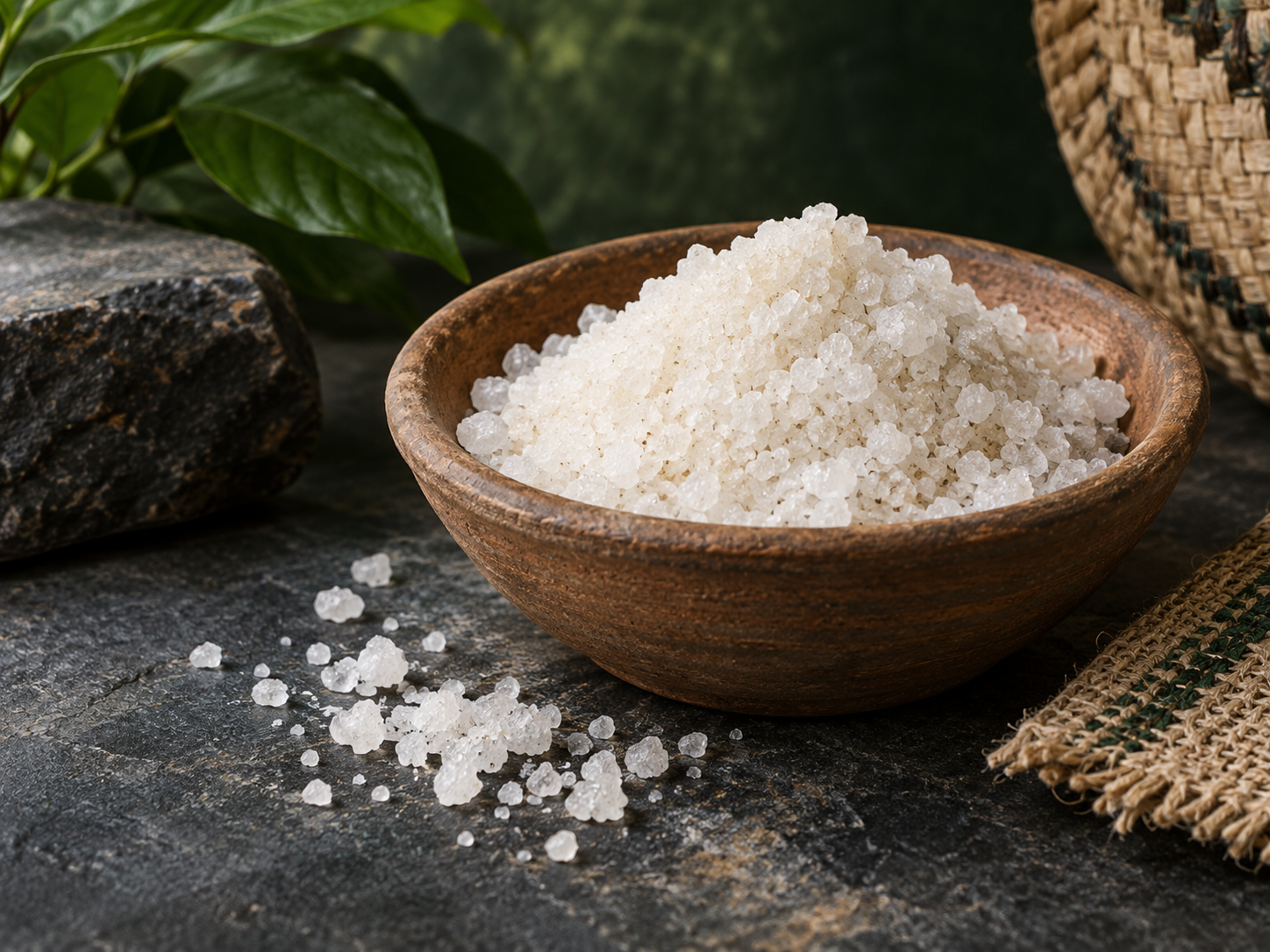
Studying traditionally sourced salt from Uburu, Ebonyi State, Nigeria, to understand its mineral composition, safety profile, processing needs, and responsible commercial potential.
Research & development stageProject perspective
Uburu has a longstanding salt-making tradition. RumTech’s project begins with a practical question: what evidence and process controls are needed to translate this distinctive resource into a consistent, responsibly positioned product?
The work will document the source and production context, then examine composition and quality across samples. Research priorities will be refined according to the intended food application and target market.
Sodium chloride, moisture, insoluble matter, and relevant mineral characterization.
Risk-based analysis for heavy metals, contaminants, and microbiological considerations where applicable.
Review of collection, evaporation, drying, milling, handling, storage, and batch consistency.
Fit-for-purpose specifications, packaging needs, sensory considerations, and compliant nutrition information.
Commercialization goal
Map source, traditional processing, sample handling, and traceability from Uburu.
Use qualified laboratory testing to establish composition, safety, and batch consistency.
Define processing improvements, specifications, packaging, and appropriate market positioning.